 By admin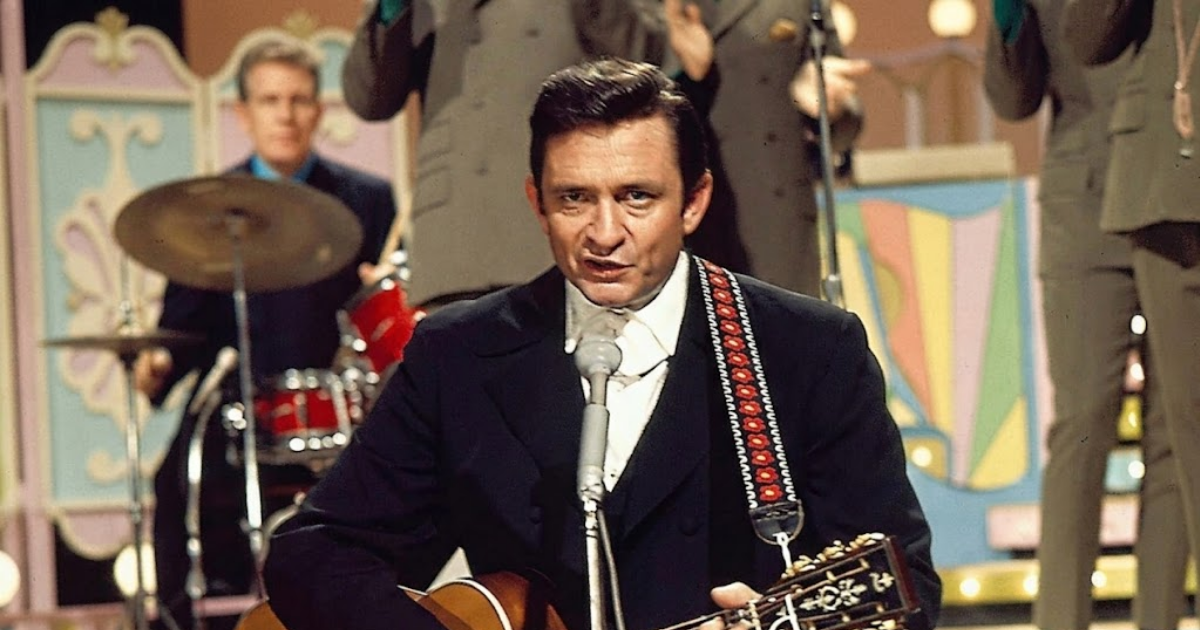
INTRODUCTION
The air inside 706 Union Avenue in Memphis was never merely oxygen; it was a pressurized chamber of cigarette smoke, humid Southern heat, and the crackling electricity of a failing tube amplifier. In late February 2026, the audiophile community received a meticulously pressed corrective to decades of digital compression: a 180-gram heavyweight vinyl reissue of With His Hot and Blue Guitar. This is not a mere nostalgia play; it is a sonic excavation of the exact moment Johnny Cash transitioned from a displaced Air Force radio interceptor into the foundational pillar of the American outlaw archetype. By utilizing the original monaural master tapes from the Sun Records archives, this release strips away the artifice of modern stereo widening to reveal the stark, percussive “boom-chicka-boom” rhythm that Sam Phillips famously championed as the pulse of a new era.
THE DETAILED STORY
The significance of With His Hot and Blue Guitar lies in its status as the first long-playing record ever released on the Sun label. Before this 1957 milestone, Phillips focused almost exclusively on the high-turnover market of 45-rpm singles. To hear “I Walk the Line” or “Cry! Cry! Cry!” in this restored mono format is to understand the deliberate minimalism Cash employed to cut through the static of mid-century AM radio. The 2026 pressing utilizes a direct-to-lathe mastering process, ensuring that the low-frequency resonance of Marshall Grant’s upright bass and the staccato telecaster flourishes of Luther Perkins remain physically palpable. There is an inherent paradox in using 21st-century precision to replicate 1950s imperfections, yet the result is a clarity that highlights the nuance of Cash’s baritone—a voice that was already weary with the weight of the world before he had even reached his twenty-fifth birthday.
As listeners navigate the tracklist, the narrative tension shifts from the individual songs to the broader cultural paradigm shift they represent. Cash was navigating a delicate intersection of gospel devotion and secular rebellion, a duality that defined his entire trajectory. The restoration emphasizes the “dry” production style of the era, where the lack of artificial reverb forces the listener into an intimate, almost claustrophobic proximity with the performer. This technical transparency raises a compelling question about the evolution of recording: in our pursuit of digital perfection, have we lost the evocative power of the “hiss” and the “hum” that signaled human presence? As this 180-gram disc spins at 33 1/3 RPM, it serves as a definitive reminder that the most enduring legacies are often built on the simplest foundations, proving that the gravity of Cash’s debut remains an inescapable force in the firmament of global music history.