 By admin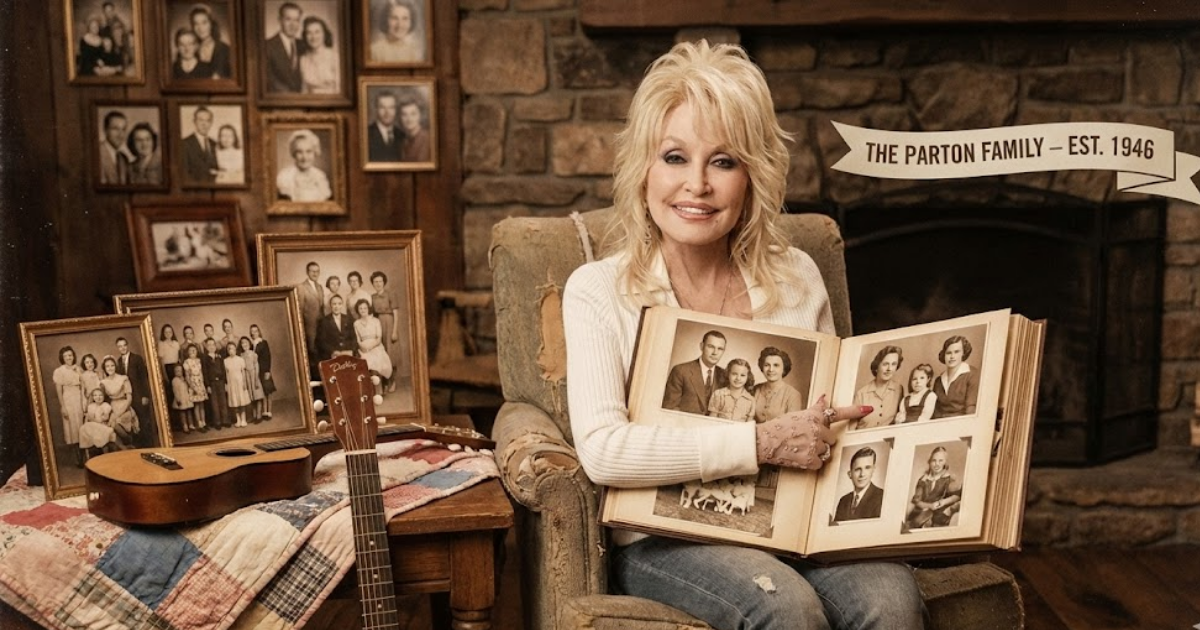
INTRODUCTION
The cabin sits on the banks of Little Pigeon River, a structural skeletal remains of white oak and pine that defies the modern definition of a dwelling. It is not merely a house; it is a reliquary of the Sevier County wilderness. Here, Robert and Avie Lee Parton raised twelve children within a footprint that would barely accommodate a contemporary primary suite. To understand the trajectory of Dolly Parton—a woman who would eventually construct a theme park empire and a literacy program spanning continents—one must first analyze the spatial mathematics of that one-room origin, where the lack of physical distance fostered an unbreakable psychological proximity.
THE DETAILED STORY
The narrative of Appalachian poverty is often framed through the lens of deficit, yet within the Parton household, the scarcity of square footage functioned as a catalyst for creative surplus. With two adults and twelve children navigating a singular living space, the environment demanded a sophisticated social contract. Privacy was an abstract concept; in its place was a collective consciousness. The children slept three or four to a straw-ticked bed, a logistical necessity that transformed sleep into a communal ritual. This forced intimacy did not breed resentment but rather a meticulous observational skill set. In the absence of walls, every sigh, every song, and every whispered prayer became part of a shared oral history, honing the sharp, empathetic ear that would later define the American songwriting canon.
Economic hardship was a constant variable, yet the domestic infrastructure was maintained with a rigorous, almost stoic pride. The “Coat of Many Colors” was not a metaphor for lack, but a testament to the ingenuity of a mother who utilized scraps to weave a garment of dignity. This paradigm of “making do” required a specific brand of intellectual agility. When Dolly describes the cabin today, she does not dwell on the deprivation of plumbing or electricity; she focuses on the acoustic properties of the porch and the communal rhythm of the kitchen. It was a masterclass in narrative architecture: how to build a world of meaning when the physical world offers nothing but the barest essentials.

The transition from the silence of the Smoky Mountains to the neon saturation of Nashville was not a rejection of this past, but a grand-scale projection of it. Parton’s career is characterized by an expansive generosity—a psychological byproduct of having started with a fraction of a room. Her meticulously curated public persona, often mistaken for artifice, is actually a fortress built around those humble coordinates. It is the definitive American paradox: a woman who owns vast estates yet remains tethered to a cabin where the walls were so thin they could not contain the ambitions of a child who saw the entire world from a single, crowded window. If the cabin was a cage of circumstance, it was also the laboratory where the most resilient spirit in entertainment was synthesized.